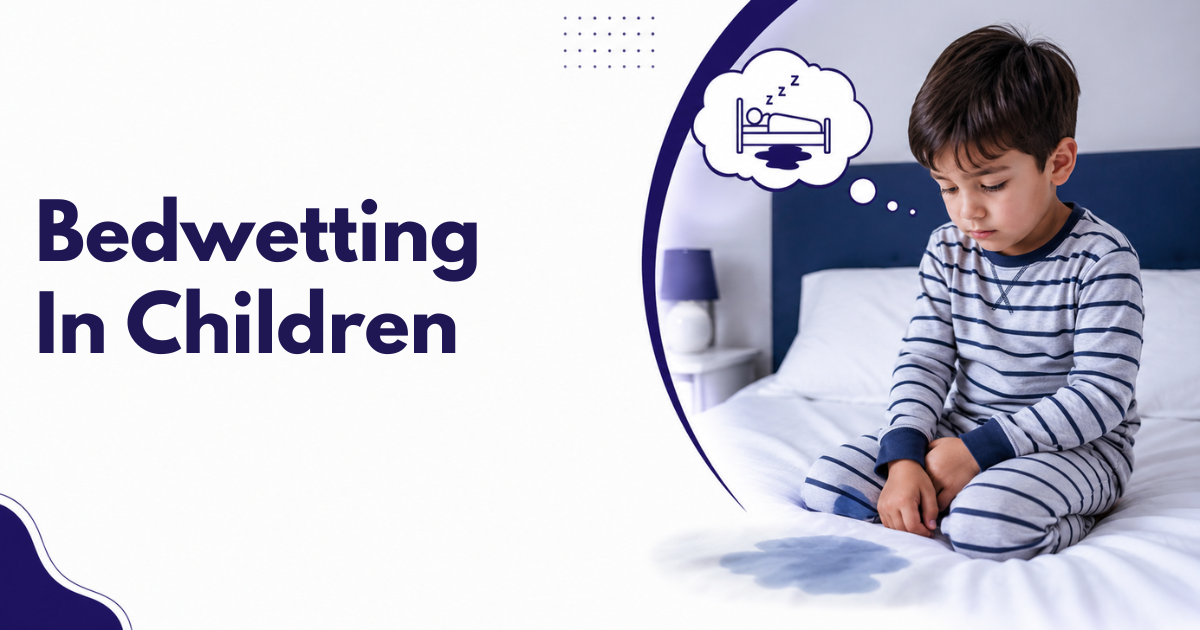
Bedwetting in children is the accidental passing of urine during sleep after the age when bladder control is normally expected. This condition is medically known as nocturnal enuresis. It is common in young children and often improves naturally with age. However, if bedwetting continues beyond the age of 5 years or starts again after a child has been dry at night, parents should consult a doctor to rule out an underlying medical condition.
What Is Bedwetting in Children?
Bedwetting, or nocturnal enuresis, is the unintentional passing of urine during sleep.
Many children take different amounts of time to develop full bladder control.
While most children stop wetting the bed as they grow older, some continue to experience bedwetting even after starting school.
This condition is common and should not be considered laziness or bad behavior.
Children usually have little or no control over bedwetting while they are asleep.
At What Age Is Bedwetting Considered Normal?
Bedwetting is considered normal in children below the age of 5 years.
As the bladder matures and the brain learns to respond to a full bladder during sleep, most children naturally develop nighttime bladder control.
If bedwetting continues regularly after the age of 5 years, it is advisable to discuss it with a doctor.
Some children simply take longer to develop bladder control, while others may have an underlying urinary problem.
What Causes Bedwetting in Children?
There is no single cause of bedwetting.
In many children, the bladder develops more slowly than expected.
Some children produce a larger amount of urine during the night than their bladder can hold.
Others sleep very deeply and do not wake up when their bladder becomes full.
Constipation, urinary tract infections, diabetes, stress, or certain urinary tract abnormalities can also contribute to bedwetting.
Sometimes, bedwetting runs in families. If one or both parents experienced bedwetting during childhood, their child may also have a higher chance of developing the condition.
What Are the Symptoms of Bedwetting?
The main symptom is passing urine during sleep without realizing it.
Some children wet the bed only occasionally, while others do so several times a week.
Most children do not have pain or discomfort.
However, if bedwetting is associated with fever, pain while passing urine, frequent urination during the day, excessive thirst, or blood in the urine, a medical evaluation is necessary because another medical condition may be present.
What Is the Difference Between Primary and Secondary Bedwetting?
There are two main types of bedwetting.
Primary nocturnal enuresis
- occurs when a child has never achieved consistent nighttime dryness for at least six months.
- This is the most common type and is usually related to delayed bladder development or family history.
Secondary nocturnal enuresis
- occurs when a child starts wetting the bed again after remaining dry at night for at least six months.
- This type may be linked to urinary tract infections, constipation, emotional stress, diabetes, or other medical conditions.
How Is Bedwetting Diagnosed?
The doctor begins by asking about the child’s medical history, toilet habits, and symptoms.
A physical examination is performed to look for any underlying problems.
A urine test may be recommended to check for infection, diabetes, or other urinary conditions.
If the child has repeated urinary problems or abnormal findings, additional investigations such as an ultrasound may be advised.
Many children do not require extensive testing.
How Is Bedwetting Treated?
The treatment depends on the child’s age and the underlying cause.
If no medical problem is found, the doctor may recommend simple lifestyle changes and regular follow-up.
Parents are often advised to encourage regular toilet visits during the day and ensure the child empties the bladder before going to bed.
Reducing sugary or caffeinated drinks in the evening may also help older children.
In some cases, doctors may recommend a bedwetting alarm or medicines, especially if the child is older and bedwetting is affecting daily life or self-confidence.
Treatment is always planned according to the individual child’s needs.
How Can Parents Help at Home?
Parents should support their child with patience and encouragement.
Punishing, scolding, or embarrassing a child for bedwetting can increase stress and make the problem worse.
Instead, parents should reassure the child that bedwetting is common and often improves with time.
Using waterproof mattress protectors, encouraging regular toilet habits, and praising dry nights without criticizing wet nights can help build confidence.
Creating a supportive environment is an important part of treatment.
When Should Parents Consult a Pediatric Urologist?
Parents should seek medical advice if bedwetting continues after the age of 5 years, becomes more frequent, or starts again after the child has been dry for several months.
A pediatric urologist should also be consulted if bedwetting is associated with daytime urine leakage, repeated urinary tract infections, difficulty passing urine, blood in the urine, or abnormal findings on a urine test.
Early evaluation helps identify any underlying urinary condition and allows treatment to begin at the right time.
Will Bedwetting Stop on Its Own?
Yes, in many children.
As the bladder and nervous system continue to mature, nighttime bladder control often improves naturally.
However, some children need medical treatment to manage bedwetting or treat an underlying cause.
The outlook is excellent for most children, especially when the condition is diagnosed early and managed appropriately.
Can Bedwetting Be Prevented?
Bedwetting cannot always be prevented because it is often related to normal bladder development.
However, maintaining healthy toilet habits, treating constipation, encouraging adequate water intake during the day, and managing urinary tract infections promptly may reduce the risk in some children.
If bedwetting continues or becomes a concern, early medical advice is recommended.
Conclusion: Bedwetting in Children
Bedwetting is a common condition in children and is often part of normal development. Most children gradually achieve nighttime bladder control as they grow older. However, persistent bedwetting after the age of 5 years or bedwetting associated with other urinary symptoms should be evaluated by a doctor. Early diagnosis helps identify any underlying cause and provides the right treatment when needed.
If your child continues to wet the bed regularly or develops new urinary symptoms, consult an experienced at Bhat Hypospadias Centre Jaipur pediatric urologist.
Proper evaluation and timely treatment can improve your child’s confidence, comfort, and overall urinary health.
FAQ About Bedwetting in Children
Q.1. At what age should bedwetting stop?
Ans. Most children develop nighttime bladder control by the age of 5 years, although some may take longer.
Q.2. Is bedwetting normal in children?
Ans. Yes. Bedwetting is common in young children and usually improves naturally as they grow.
Q.3. What causes bedwetting in children?
Ans. Common causes include delayed bladder development, deep sleep, family history, constipation, urinary tract infections, and certain medical conditions.
Q.4. Should I wake my child during the night to use the toilet?
Ans. Waking a child may provide temporary dryness but usually does not treat the underlying cause of bedwetting. It is best to follow your doctor’s advice.
Q.5. When should I consult a pediatric urologist for bedwetting?
Ans. You should consult a pediatric urologist if bedwetting continues after the age of 5 years, starts again after a period of dryness, or is associated with daytime urine leakage, repeated urinary infections, or difficulty passing urine.